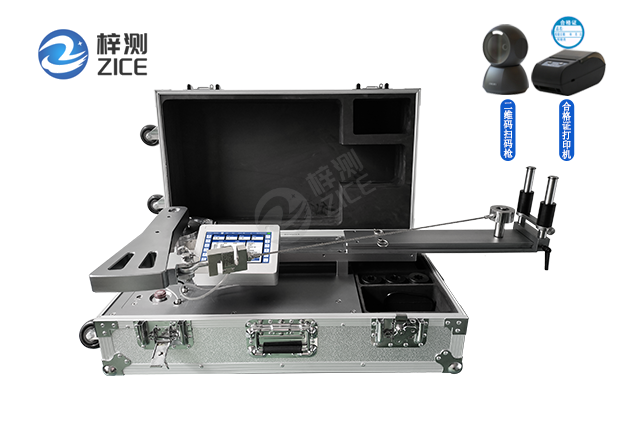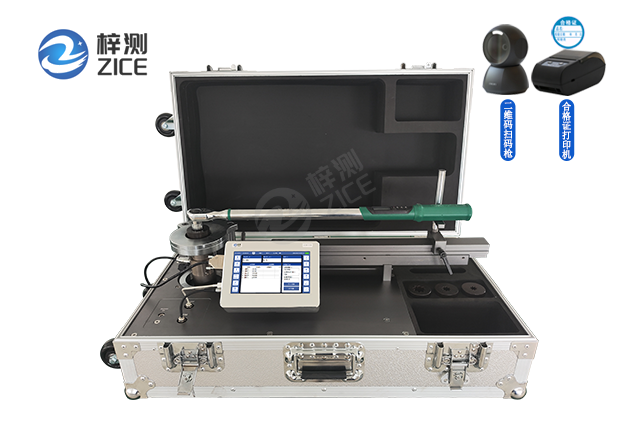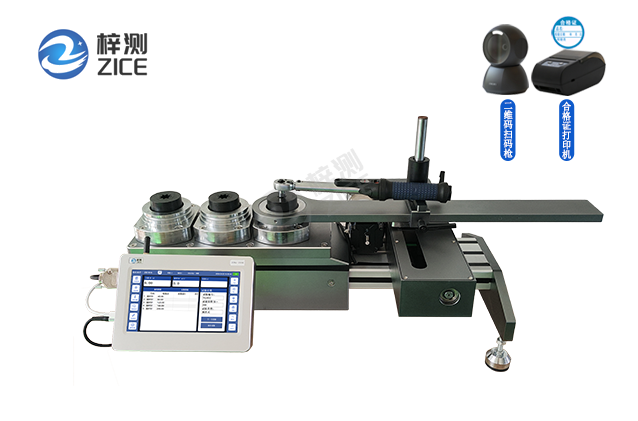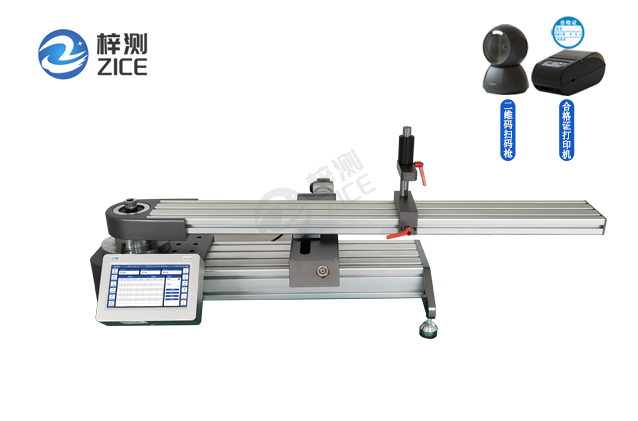
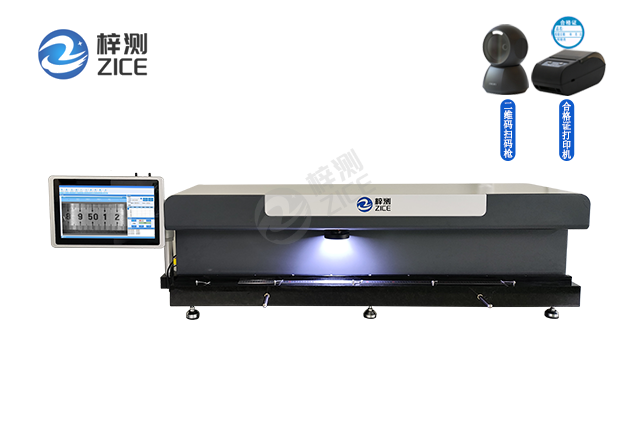
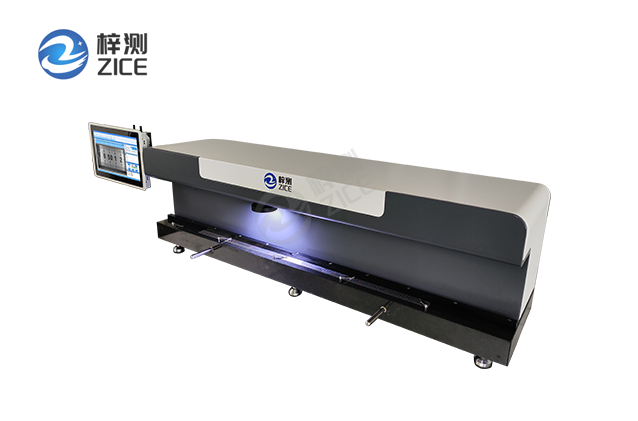
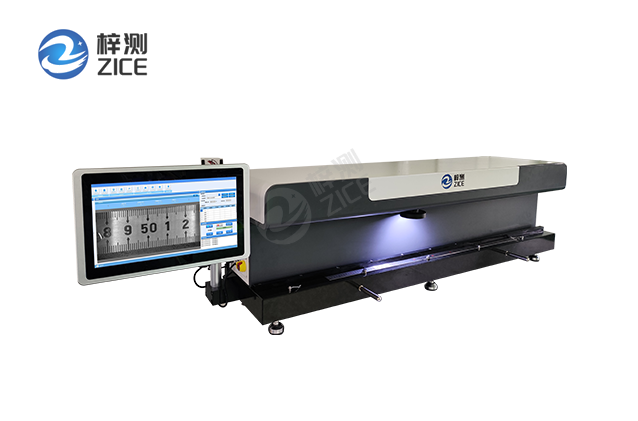
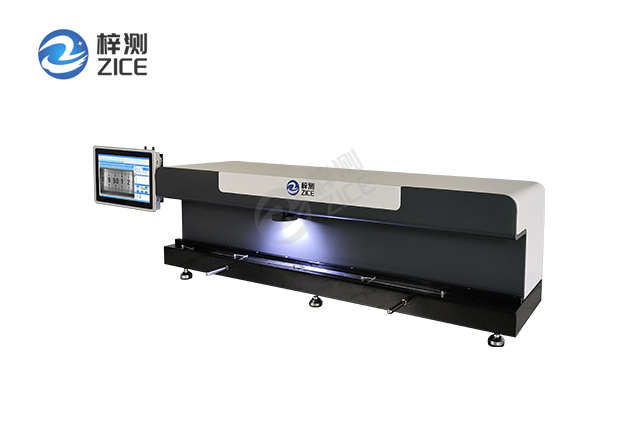
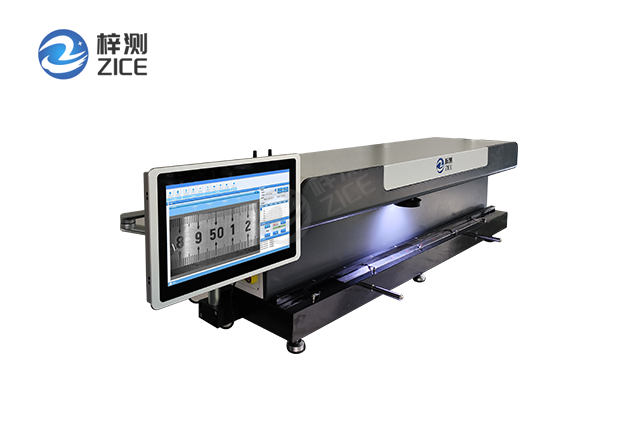
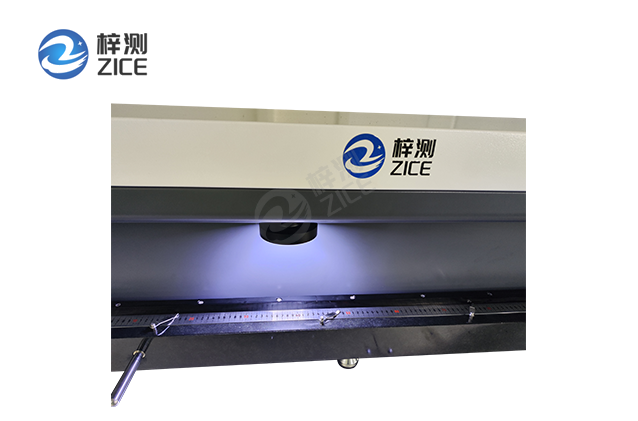
The ZCGZC-1000B intelligent imaging steel ruler calibration device is developed and manufactured by Wuxi Zice Tuoxin Metrology Technology. This device is a brand new intelligent equipment, and its measurement principle fully complies with the requirements of the JJG1-1999 Steel Ruler Calibration Regulations. It has the characteristics of simple operation, high accuracy, and comprehensive functions, and is widely used in various industries such as metrology institutions, mechanical manufacturing, and scientific research institutions.
Technical parameters:1. Measurement range: 0-1000mm (Can be inspected in sections of 2m);
2. Accuracy: ± 0.01mm;
3. Resolution: 0.1um;
4. Standard: 1m glass line ruler, division value 1mm, accuracy 8um (optional)
5. Loading method: automatic loading,
6. Verification speed: 2s/point;
7. Dimensions: 1540mm * 360mm * 430mm
Performance characteristics:
1. The fully automatic calibration device for steel rulers adopts high-precision grating and precise motion control technology, while introducing machine vision technology to achieve fully automatic and high-precision measurement of steel ruler parameters.
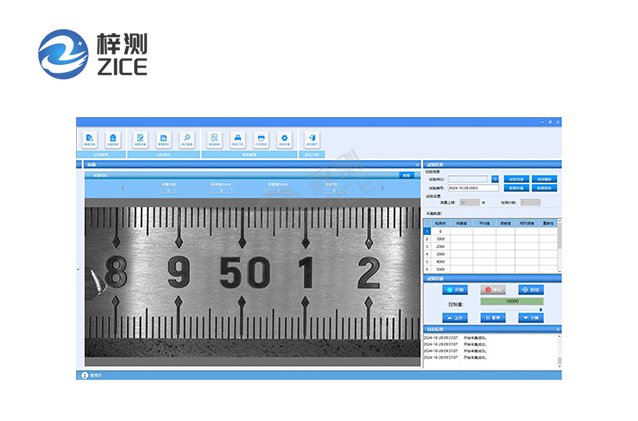
2. The image-based steel ruler calibration device is a fully automatic measurement device. The operator only needs to install the tested steel ruler, select the model specifications and inspection point information of the tested steel ruler on the calibration software, and click the "Start Calibration" button. The system will run according to the user-defined calibration point, and move to the corresponding position based on the high-precision grating ruler reading. Then, the camera takes a line pattern image and automatically analyzes the line pattern information, including line width, line pattern, and edge distance. After all the lines to be tested are verified, the computer determines whether the steel ruler is qualified according to the regulations. The entire measurement process is fast and accurate, greatly reducing the labor intensity of the operator. After the verification is completed, the verification certificate and original records can be generated and printed immediately.
3. For each verification record, information about the commissioning unit, device information, verification data, and pictures taken at each point can be consulted.
4. The device comes with Ethernet and WiFi, which can upload test data and process, raw data, standard instrument information, environmental temperature and humidity, atmospheric pressure, etc. in batches to the measurement management system.
5. The equipment can be connected to a code scanning gun and a label printer. The device information can be extracted by scanning the QR code or barcode. After the verification of the label printer is completed, the qualified label can be automatically printed, or the calibration certificate can be obtained by scanning the code through WeChat and Alipay.
6. Measurement management platform: It can manage multiple steel ruler calibration devices, commission units, sample information, certificate and original record generation, testing personnel, expiration reminders, etc.
Measurement management platform:
The metrology management platform is a comprehensive software platform that integrates data input, processing, analysis, and report generation. It aims to help enterprises achieve automation, informatization, and intelligence in metrology work. Its main functions include data input and storage, data processing and analysis, report generation and export, etc. It is widely used in metrology management work in various industries.
1. Homepage: including login information, notifications and announcements, to-do list, approval progress, recent experiments, today's experiments, experiment statistics, equipment expiration, etc.
2. Basic information: Management of relevant basic data for experimental operation, management of commissioning units, storage location information, and sample information.
3. Equipment ledger: Due to the variety of measuring instruments, complex sources, allocation from other projects, subcontracting, and procurement from different regions in the project, it is particularly important to establish a measuring instrument ledger and instrument file, which is also the fundamental work of measuring instrument management.
4. Calibration and verification: Certificate editing supports multiple data entry methods, such as automatic device upload, manual input, and file import, ensuring fast and accurate data entry. Certificate viewing allows for the review and approval of certificates. Certificate printing supports generating reports in various formats according to user needs, including tables, charts, etc. Users can also export reports to common file formats for convenient data sharing and transmission.
5. Statistical query and analysis: Equipped with various data processing and analysis tools, it can automatically process, statistically analyze, and trend predict the entered measurement data, helping users quickly obtain valuable information.
6. Quality assurance management: project initiation and qualification management, calibration standards, printing templates and other quality data management.
7. Logistics management: facilitates the management of company logistics related data by users, such as company documents, information materials, procurement management, supplier management, etc.
8. System management: Basic data management for system operation, role management, department management, user management, menu management, system settings, etc.
9. Customer service system: WeChat system, QR code progress inquiry system, online inquiry system, customer measuring instrument management system, certificate verification system, self-service download system, complaints and suggestions, etc.